Local Species Database

Identify local reptiles, learn about their behavior, and understand their role in our ecosystem.

View details for Banded Kukri Snake
Banded Kukri Snake
Non-Venomous

Oligodon fasciolatus

Banded Kukri Snake

The Banded Kukri Snake is a beautifully patterned small snake with distinctive reddish-brown bands on a lighter background. Like other kukri snakes, it possesses specialized rear teeth shaped like a Nepalese kukri knife, used primarily for cutting open reptile eggs. This non-venomous snake is primarily nocturnal and feeds on reptile eggs, small geckos, and invertebrates. It is commonly found under stones, logs, and leaf litter in forests and gardens across India. When threatened, the Banded Kukri Snake may coil tightly and hide its head under its body while wiggling its tail as a distraction. Its beautiful banding pattern makes it one of the more visually striking small snakes in India, though it is often overlooked due to its secretive habits.
Found across India i...
Read More
View details for Banded Racer
Banded Racer
Non-Venomous

Argyrogena fasciolata

Banded Racer

The Banded Racer is a fast-moving, slender non-venomous snake recognized by its distinctive dark and light banding pattern, which becomes less prominent in adults. Juveniles have striking black and white bands that gradually fade with age. This agile snake is primarily diurnal and terrestrial, feeding on toads, frogs, lizards, and small rodents. When threatened, it may raise its front body, flatten its neck, and vibrate its tail — behaviors that sometimes cause it to be confused with venomous species. Banded Racers are commonly found in open areas such as grasslands, agricultural fields, and gardens. They are swift hunters that chase down their prey using speed and agility. Despite their defensive displays, they are completely harmless and play an important role in controlling pest populations.
Found throughout pen...
Read More
View details for Brahminy Blind Snake
Brahminy Blind Snake
Non-Venomous

Indotyphlops braminus

Brahminy Blind Snake

The Brahminy Blind Snake (Flowerpot Snake) is the smallest snake species in India, rarely exceeding 15 cm in length. This tiny, worm-like snake is often mistaken for an earthworm due to its small size, dark glossy body, and vestigial eyes covered by scales. Remarkably, the Brahminy Blind Snake is the only known snake species that is entirely parthenogenetic — all individuals are female and reproduce without mating. This unique reproductive strategy has helped it become one of the most widely distributed reptiles in the world. This completely harmless burrowing snake feeds on ant and termite eggs, larvae, and pupae. It is frequently transported accidentally in potted plants and garden soil — hence its common name "Flowerpot Snake." It poses absolutely no threat to humans and is a beneficial garden inhabitant.
Found throughout Ind...
Read More
View details for Bronzeback Tree Snake
Bronzeback Tree Snake
Non-Venomous

Dendrelaphis tristis

Bronzeback Tree Snake

The Bronzeback Tree Snake is an elegantly slender, fast-moving arboreal snake with a distinctive bronze-olive coloring and large, expressive eyes. Growing up to 1.5 meters, it is one of the most graceful and agile snakes in India. This completely non-venomous snake is an excellent climber and jumper, capable of leaping between tree branches to pursue prey or escape predators. It feeds on frogs, lizards (especially garden lizards), birds, and their eggs. When alarmed, the Bronzeback inflates its neck, revealing blue interscale skin, and opens its mouth wide in a dramatic threat display. Despite this impressive performance, it is entirely harmless. Found across India, it is commonly seen in gardens, parks, and forest edges where trees and bushes provide its preferred aerial hunting grounds.
Found throughout Ind...
Read More
View details for Buff Striped Keelback
Buff Striped Keelback
Non-Venomous

Amphiesma stolatum

Buff Striped Keelback

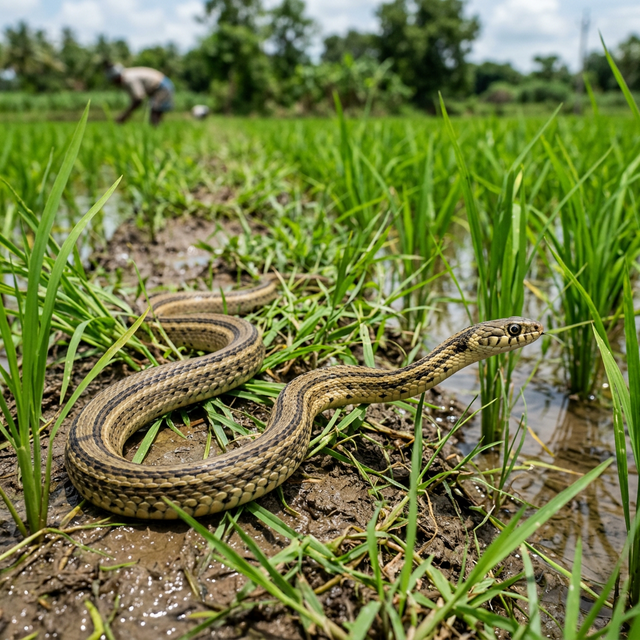
The Buff Striped Keelback is one of the most commonly encountered snakes in Indian agricultural areas. Named for the distinctive buff (yellowish-brown) and dark stripes running along its body, this small snake rarely exceeds 60 cm. This completely harmless snake feeds on frogs, toads, and small fish. It is semi-aquatic and commonly found in and around wet rice paddy fields, making it a familiar sight to Indian farmers during the monsoon season. The Buff Striped Keelback is docile and rarely bites, even when handled. Its small size and gentle nature make it one of the most harmless snakes in India. Despite this, it is often killed out of fear by people who cannot distinguish it from venomous species.
Found throughout Ind...
Read More
View details for Checkered Keelback
Checkered Keelback
Non-Venomous

Fowlea piscator

Checkered Keelback

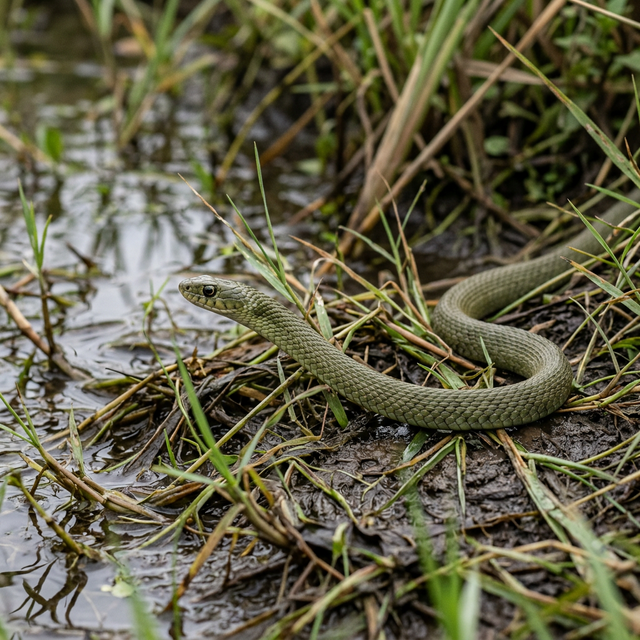
The Checkered Keelback is the most common water snake in India, easily identified by its distinctive olive-green body with dark checkered or quincunx pattern. It is completely non-venomous and harmless to humans. This semi-aquatic snake is an excellent swimmer and diver, feeding primarily on fish, frogs, and tadpoles. It is frequently found near ponds, rivers, rice paddies, and any standing water body. When threatened, it may flatten its body and display aggressive posturing, but it cannot cause serious harm. Checkered Keelbacks are diurnal and among the most frequently encountered snakes in India, especially around water. They are often mistaken for venomous water snakes and killed unnecessarily. The species plays a vital role in aquatic ecosystems by controlling fish and frog populations.
Found throughout Ind...
Read More
View details for Common Kukri Snake
Common Kukri Snake
Non-Venomous

Oligodon arnensis

Common Kukri Snake

The Common Kukri Snake gets its unusual name from its distinctive rear teeth shaped like a Nepalese kukri knife. These specialized teeth are used to slit open reptile eggs, which form a major part of its diet. This small, non-venomous snake (rarely exceeding 50 cm) has a brown body with dark crossbands and is often found under stones, logs, and leaf litter. It feeds on eggs of reptiles, small geckos, invertebrates, and occasionally small frogs. When threatened, the Kukri Snake exhibits an interesting defensive behavior — it may coil tightly, hide its head, and wave its tail as a distraction. If handled, it can inflict painful (but harmless) bites with its specialized teeth that may cause minor bleeding due to the cutting action.
Found across India i...
Read More
View details for Common Sand Boa
Common Sand Boa
Non-Venomous

Eryx conicus

Common Sand Boa

The Common Sand Boa is a stout, burrowing snake with a distinctive rough-scaled body and a short, blunt tail. It is one of the two sand boa species found in India and is completely non-venomous, killing prey by constriction. This snake spends most of its life underground or buried in sand, emerging at night to hunt small mammals, lizards, and other snakes. Its rough, keeled scales help it move through loose soil and sand with remarkable efficiency. Sand Boas are ovoviviparous, giving birth to 6-8 live young. They are slow-moving and docile, rarely biting even when handled. Unfortunately, they face threats from illegal wildlife trade due to various superstitions and myths about their supposed medicinal or magical properties.
Found throughout the...
Read More
View details for Common Trinket Snake
Common Trinket Snake
Non-Venomous

Coelognathus helena

Common Trinket Snake

The Common Trinket Snake is an elegant, slender non-venomous snake with a beautiful brown body adorned with dark crossbars. One of the most graceful snakes in India, it can grow up to 1.5 meters in length. Trinket Snakes are excellent climbers and fast-moving hunters that feed on rodents, birds, lizards, and frogs. They are commonly found in rocky terrain, old walls, and ruins — making them frequent visitors to historical monuments and ancient structures. When threatened, the Trinket Snake may vibrate its tail rapidly against dry leaves (producing a rattling sound), flatten its body, and strike repeatedly. Despite this defensive behavior, it is completely harmless. The species is valuable for rodent control in agricultural and urban areas.
Found throughout Ind...
Read More
View details for Common Wolf Snake
Common Wolf Snake
Non-Venomous

Lycodon aulicus

Common Wolf Snake

The Common Wolf Snake is one of the most frequently encountered snakes in Indian homes and urban areas. This small, nocturnal snake (usually under 75 cm) is named for its prominent, flattened head and slightly enlarged front teeth that resemble wolf fangs. The Wolf Snake is completely non-venomous and harmless to humans. It feeds primarily on geckos, small lizards, and skinks — making it a valuable visitor in homes where it helps control gecko populations. Its brown body with white crossbands can sometimes cause it to be mistaken for the venomous Common Krait. Key differences from the krait include: the Wolf Snake has a flathead with distinctly larger scales, its white bands do not extend across the belly, and it is generally much smaller. Education about this common and beneficial species can help prevent unnecessary killing.
Found throughout Ind...
Read More
View details for Dog-faced Water Snake
Dog-faced Water Snake
Non-Venomous

Cerberus schneiderii

Dog-faced Water Snake

The Dog-faced Water Snake is a semi-aquatic, mildly venomous snake found in coastal and mangrove habitats across India. Named for its somewhat dog-like facial appearance, this snake has upward-facing nostrils and eyes positioned on the top of its head — adaptations for an aquatic lifestyle. This rear-fanged snake has mild venom that is not dangerous to humans. It feeds primarily on fish, crabs, and shrimp, hunting in shallow coastal waters, mangrove creeks, and estuaries. Dog-faced Water Snakes are primarily nocturnal and can be found in brackish water habitats along India's coastline. They give birth to live young (8-26 per litter). The species is an important predator in mangrove ecosystems and helps maintain the ecological balance of coastal environments.
Found along the coas...
Read More
View details for Golden Flying Snake
Golden Flying Snake
Non-Venomous

Chrysopelea ornata

Golden Flying Snake

The Golden Flying Snake is one of the most remarkable snakes in India — capable of controlled gliding through the air by launching itself from trees and flattening its body to form a concave wing shape. It can glide distances of up to 10 meters between trees. This beautiful, slender snake has intricate black and greenish-yellow ornate patterns that give it a jewel-like appearance. Growing up to 1.3 meters, it is the most ornately patterned of the five known flying snake species. The Golden Flying Snake is mildly venomous through rear fangs but poses no threat to humans. It feeds on lizards (especially geckos), tree frogs, birds, and bats. Found in tropical and subtropical forests of India, this arboreal species is a spectacular example of evolutionary adaptation.
Found across peninsu...
Read More
View details for Green Keelback
Green Keelback
Non-Venomous

Rhabdophis plumbicolor

Green Keelback

The Green Keelback is a small, colorful non-venomous snake commonly found near water bodies across India. Its olive-green to bright green upper body with keeled (ridged) scales gives it its common name. This harmless snake feeds primarily on frogs, toads, and tadpoles, making it closely associated with wet habitats. It is diurnal and can often be seen basking near marshes, ponds, and rice paddies during the monsoon season. When threatened, the Green Keelback may flatten its body, raise its head, and display defensive posturing, but it rarely bites. The striking appearance of some individuals — with bright green coloring and red or orange nuchal spots — makes it one of the more visually interesting small snakes in India.
Found throughout Ind...
Read More
View details for Indian Egg-eating Snake
Indian Egg-eating Snake
Non-Venomous

Elachistodon westermanni

Indian Egg-eating Snake

The Indian Egg-eating Snake is one of the rarest snakes in India and is the sole member of its genus. This small, specialized snake feeds exclusively on eggs, possessing unique vertebral projections that crack the eggshell as it is swallowed. Growing to about 80 cm, this non-venomous snake has a dark brown body with a distinctive white dorsal stripe and arrow-shaped marking on its head. It was considered so rare that it was thought to be extinct until rediscoveries in several Indian states. The Indian Egg-eating Snake is nocturnal and primarily arboreal, climbing trees and bushes to raid bird nests. After swallowing an egg, the specialized vertebral teeth crack the shell, the contents are consumed, and the compressed shell is regurgitated. This remarkable adaptation makes it one of the most specialized feeders among Indian snakes.
Found in scattered l...
Read More
View details for Indian Rat Snake
Indian Rat Snake
Non-Venomous

Ptyas mucosa

Indian Rat Snake

The Indian Rat Snake (Dhaman) is one of the most common and widely distributed non-venomous snakes in India. Growing up to 2.5 meters, it is one of the fastest-moving snakes in India and is often called the "Oriental Rat Snake." This large, olive to brown colored snake is a highly beneficial species that feeds primarily on rodents, making it an invaluable natural pest controller in agricultural areas. A single rat snake can consume dozens of rats per year, helping protect crops and grain stores. Rat Snakes are diurnal, active, and alert. When threatened, they may rear up, flatten their neck (mimicking a cobra), and strike — though they have no venom. They are excellent climbers and swimmers. Unfortunately, their cobra-mimicking behavior often leads to misidentification and unnecessary killing.
Found throughout Ind...
Read More
View details for Indian Rock Python
Indian Rock Python
Non-Venomous

Python molurus

Indian Rock Python

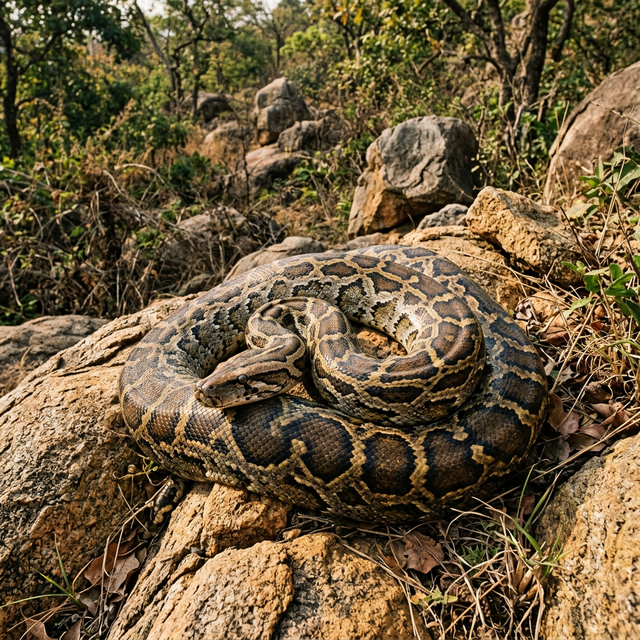
The Indian Rock Python is one of the largest snake species in India, growing up to 6 meters (20 feet) in length. This massive non-venomous constrictor kills its prey by coiling around it and squeezing until the animal can no longer breathe. Indian Rock Pythons have beautiful brown and tan patterned skin with large blotches. They possess heat-sensing labial pits along their upper jaw that help them detect warm-blooded prey in darkness. Despite their size, they are generally docile toward humans. These pythons are excellent swimmers and can remain submerged for up to 30 minutes. They feed on mammals (deer, monkeys, pigs), birds, and reptiles. The female lays 20-100 eggs and incubates them by coiling around the clutch and generating body heat through muscle contractions. Protected under Schedule I of the Indian Wildlife Protection Act.
Found throughout Ind...
Read More
View details for Indian Smooth Snake
Indian Smooth Snake
Non-Venomous

Coronella brachyura

Indian Smooth Snake

The Indian Smooth Snake is a small, secretive, completely non-venomous snake found in hilly and mountainous regions of peninsular India. Named for its exceptionally smooth scales, this snake rarely exceeds 50 cm in length. This shy, ground-dwelling snake feeds primarily on lizards and small skinks. It subdues its prey by constriction, wrapping its small body around the victim. The smooth scales give it a glossy, polished appearance that distinguishes it from keeled-scaled species. Indian Smooth Snakes are found in the Western Ghats and associated hill ranges, typically in rocky terrain with good ground cover. They are rarely seen due to their secretive habits and dull coloring that provides excellent camouflage among rocks and dry leaves.
Found in the Western...
Read More
View details for Indian Vine Snake
Indian Vine Snake
Non-Venomous

Ahaetulla nasuta

Indian Vine Snake

The Indian Vine Snake (Green Whip Snake) is among the most uniquely beautiful snakes in India with its extremely slender body, bright green coloring, and distinctively pointed snout. It possesses the rare feature of horizontal keyhole-shaped pupils — unique among Indian snakes. This mildly venomous rear-fanged snake has venom that is harmless to humans but effective against its prey of frogs and lizards. The Vine Snake's binocular vision, facilitated by grooves along its snout, allows it to accurately judge distances when striking at prey. Vine Snakes are diurnal and arboreal, often seen hanging from branches with their tongue flicking to detect prey. When threatened, they inflate their body, revealing dark interscale skin in a striking contrast to their green scales, and may open their mouth wide in a dramatic gaping display.
Found throughout Ind...
Read More
View details for Montane Trinket Snake
Montane Trinket Snake
Non-Venomous

Coelognathus helena monticollaris

Montane Trinket Snake

The Montane Trinket Snake is a subspecies of the Common Trinket Snake adapted to higher elevation habitats in the Western Ghats and other mountain ranges of India. It is generally darker in coloration than its lowland relatives. This medium-sized non-venomous snake (up to 1.2 meters) is an agile hunter feeding on rodents, birds, lizards, and frogs. Like other trinket snakes, it is an excellent climber commonly found on rocky hillsides and in stone walls. The Montane Trinket Snake plays an important role in mountain ecosystems by controlling rodent populations. It is found in the shola forests and grasslands of the Western Ghats, typically at elevations above 1,000 meters, where it occupies a similar ecological niche to the Common Trinket Snake at lower elevations.
Found in the Western...
Read More
View details for Olive Keelback
Olive Keelback
Non-Venomous

Atretium schistosum

Olive Keelback

The Olive Keelback is a semi-aquatic, non-venomous water snake commonly found near freshwater bodies across India. Its uniform olive-brown upper body and keeled scales make it easily identifiable among Indian water snakes. This medium-sized snake (up to 80 cm) is an excellent swimmer and diver, feeding primarily on fish and frogs. It is often found in and around ponds, irrigation canals, and rice paddies. Unlike the similar-looking Checkered Keelback, the Olive Keelback has a more uniform coloration. When captured or threatened, the Olive Keelback may release a foul-smelling musk from its cloacal glands as a defense mechanism. It is harmless to humans and plays an important role in aquatic ecosystem health by helping control fish and amphibian populations.
Found throughout Ind...
Read More
View details for Red Sand Boa
Red Sand Boa
Non-Venomous

Eryx johnii

Red Sand Boa

The Red Sand Boa (Two-headed Snake) is a distinctive burrowing snake with a reddish-brown smooth body and a blunt tail that closely resembles its head — earning it the nickname "two-headed snake." This adaptation confuses predators about which end to attack. This completely non-venomous constrictor is fossorial, spending most of its life underground. It feeds on small rodents, lizards, and young snakes. The Red Sand Boa's smooth, shiny scales allow it to move easily through soil. Sadly, this harmless snake is one of the most trafficked wildlife species in India due to bizarre superstitions that it brings good luck, has magical powers, or possesses medicinal properties. It is protected under Schedule IV of the Indian Wildlife Protection Act, and possession or trade is a criminal offense.
Found across the Ind...
Read More
View details for Reticulated Python
Reticulated Python
Non-Venomous

Malayopython reticulatus

Reticulated Python

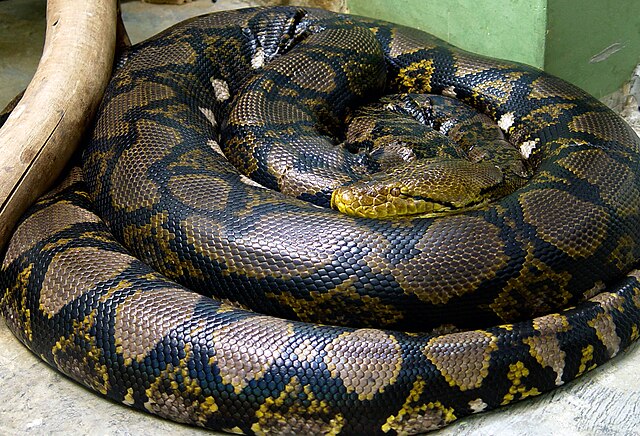
The Reticulated Python is the world's longest snake, with confirmed lengths exceeding 6.25 meters. Found in Northeast India and the Nicobar Islands, this magnificent constrictor has a complex geometric pattern of diamond shapes in brown, olive, and cream — "reticulated" refers to this net-like pattern. This powerful non-venomous constrictor feeds on mammals, birds, and other reptiles. Large specimens can take prey as large as deer and wild pigs. Like all pythons, it kills by constriction, wrapping its muscular coils around prey and squeezing. Reticulated Pythons are excellent swimmers and have colonized many remote islands. They are generally shy and avoid humans. In India, they are found in tropical forests of the Northeast and the Nicobar Islands. They are protected under the Indian Wildlife Protection Act.
Found in Northeast I...
Read More
View details for Royal Snake
Royal Snake
Non-Venomous

Spalerosophis diadema

Royal Snake

The Royal Snake (Diadem Snake) is a large, attractive non-venomous snake found in the arid and semi-arid regions of India. Growing up to 1.8 meters, it has a beautiful pattern of dark blotches on a sandy-tan background with a distinctive dark streak through the eye. This powerful constrictor feeds primarily on rodents, birds, and lizards, making it an excellent natural pest controller in desert and dry environments. It is diurnal, fast-moving, and can be quite defensive when cornered. Royal Snakes are found in the Thar Desert region of Rajasthan, Gujarat, and surrounding areas. They inhabit rocky terrain, sand dunes, and dry scrubland. Despite their impressive size and bold temperament, they are harmless to humans and beneficial for controlling rodent populations in agricultural areas.
Found in Rajasthan, ...
Read More
View details for Shieldtail Snake
Shieldtail Snake
Non-Venomous

Uropeltis macrolepis

Shieldtail Snake

The Shieldtail Snake belongs to an ancient, primitive family of burrowing snakes endemic to the Indian subcontinent. Named for the distinctive flattened, rough shield-like scale on their tail tip, these fossorial snakes spend virtually their entire lives underground. Shieldtail Snakes are completely non-venomous and harmless. They feed on earthworms and soft-bodied invertebrates found in the soil. Their smooth, iridescent scales reduce friction as they move through soil, and their small heads allow them to push through compact earth. The Uropeltidae family is endemic to India and Sri Lanka, making Shieldtail Snakes of significant biogeographic interest. They are found mainly in the Western Ghats and associated hill ranges. When handled, they may press their sharp tail shield against the handler's skin in defense.
Endemic to the Weste...
Read More
View details for Striped Keelback
Striped Keelback
Non-Venomous

Amphiesma stolatum

Striped Keelback

The Striped Keelback is a small, harmless non-venomous snake with distinctive longitudinal stripes running along its body. It is one of the most abundant snakes in wet habitats across India, particularly during the monsoon season. This semi-aquatic snake feeds on frogs, toads, tadpoles, and small fish. It is commonly found in and around rice paddies, marshes, and wet grasslands where its prey is abundant. The keeled (ridged) scales on its body help it move efficiently through grass and shallow water. Striped Keelbacks are docile and rarely bite even when handled. They are harmless to humans and are actually beneficial in agricultural settings where they help control frog and insect populations. Their small size (usually under 60 cm) and gentle nature make them one of the most inoffensive snakes in India.
Found throughout Ind...
Read More
Chat with us